Aviation
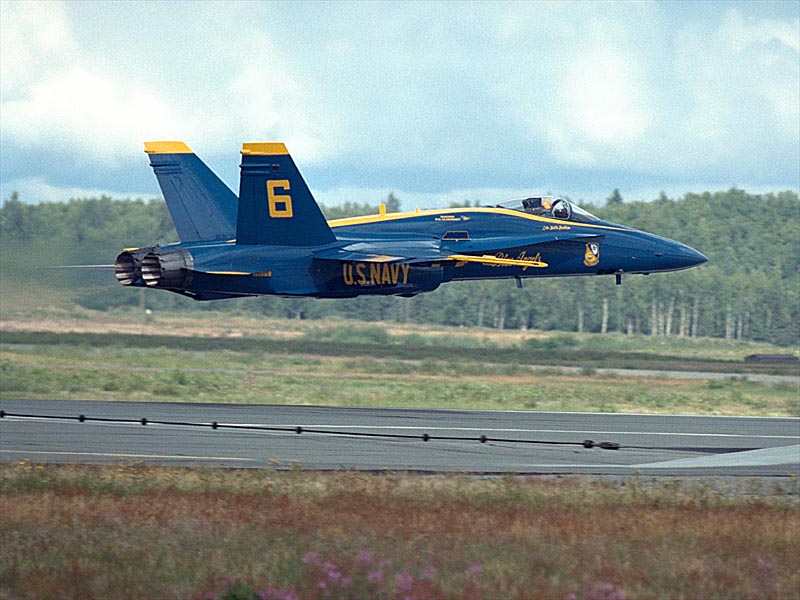
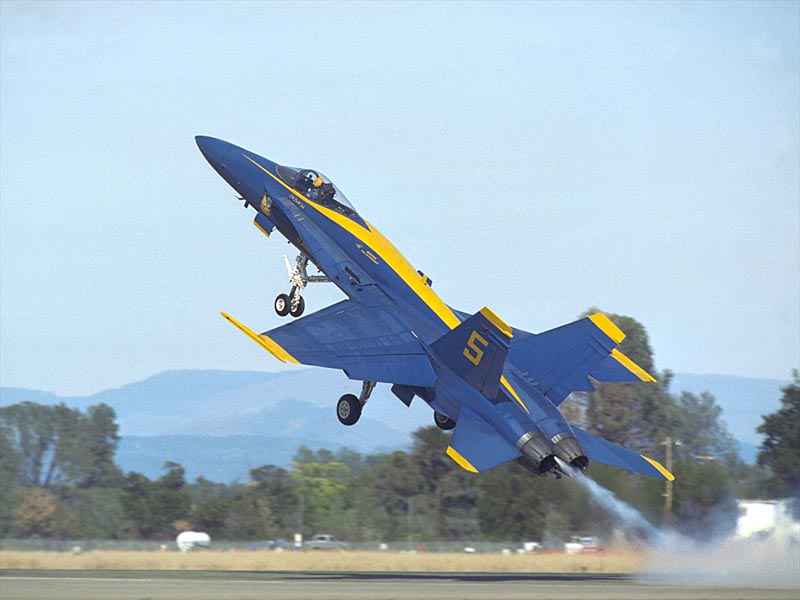
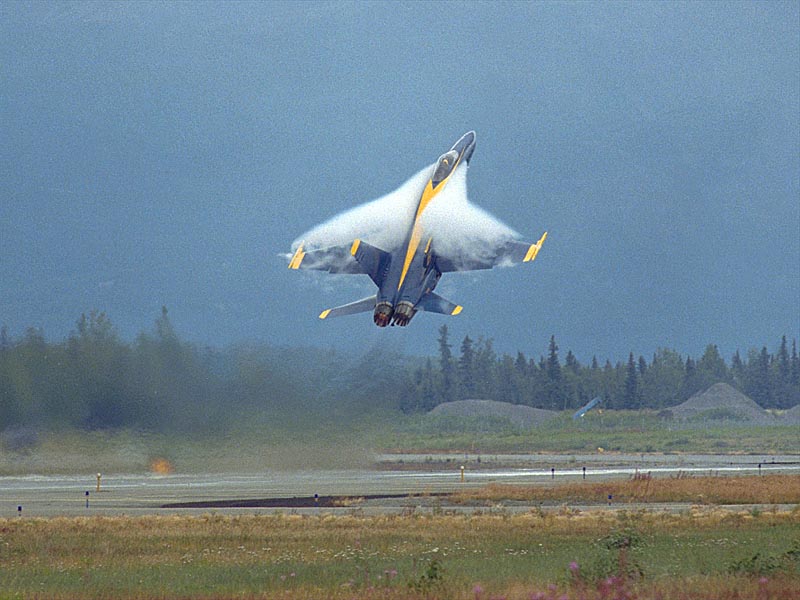
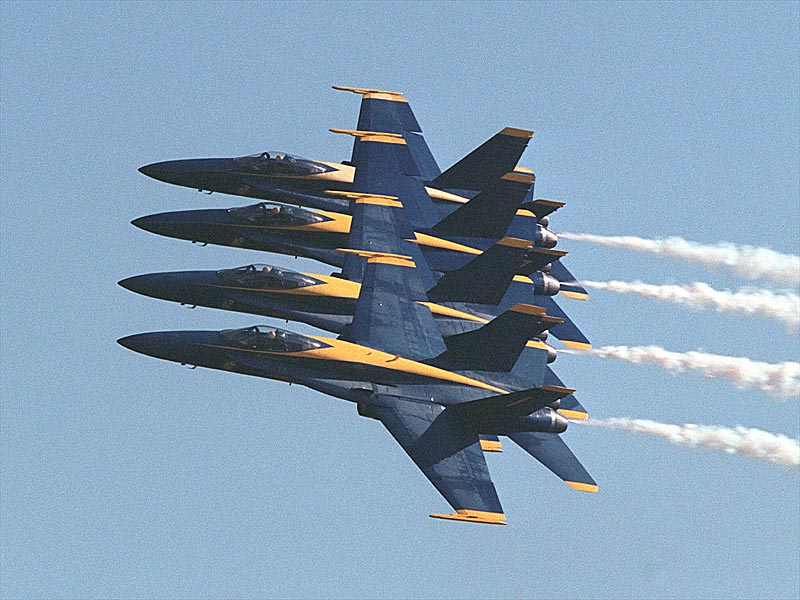
US Navy's Blue Angels flight demonstration team
flying the McDonnell Douglas F/A-18A
Some of the images can be enlarged to full scale. Just search for the hand and click. If you would like any other images to full scale, just zap me.
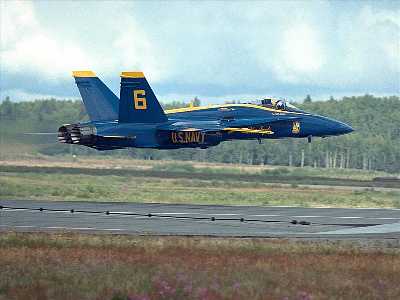
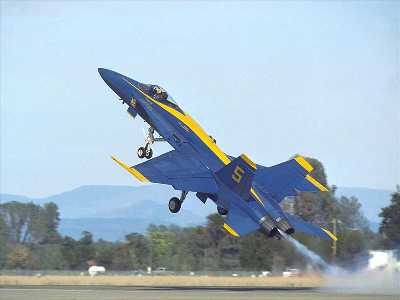
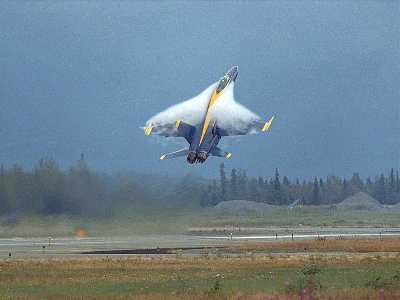
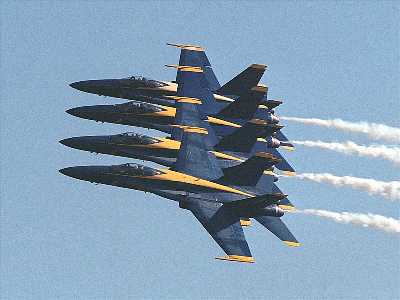
Words are not necessary . . . the incomparable Blues.
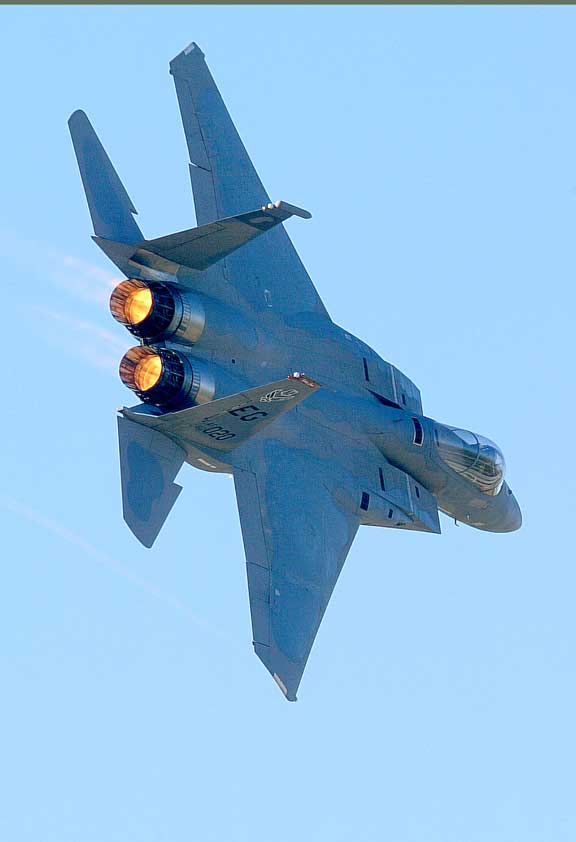
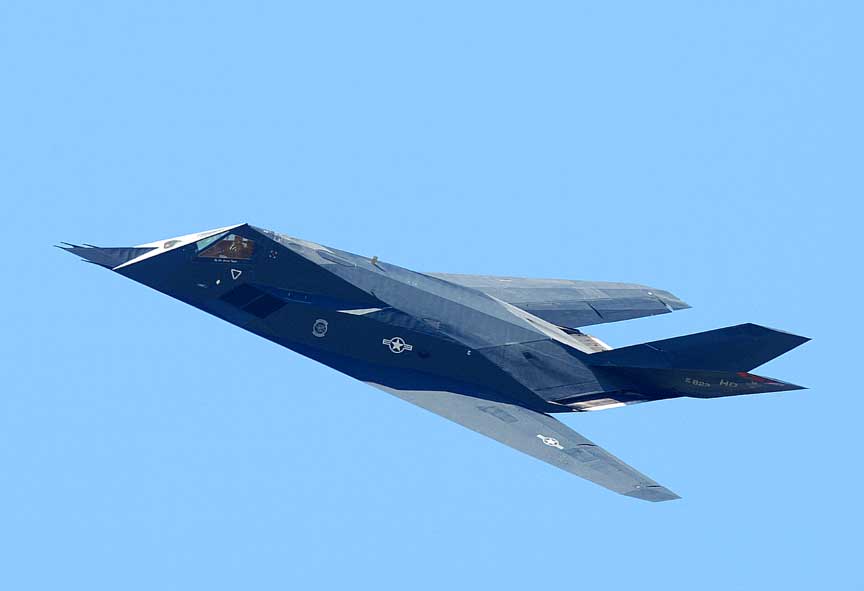

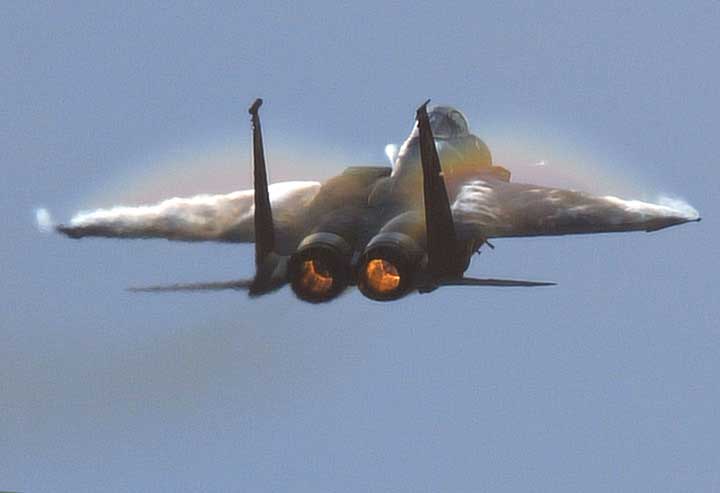 A friend sent these excellent images showing just a few sights from an airshow at NAS PT. Magu, California, USA. From left to right, they are of course, an F-15C, an F-117, the Thunderbirds in their F-16s, and another excellent shot of the F-15C.
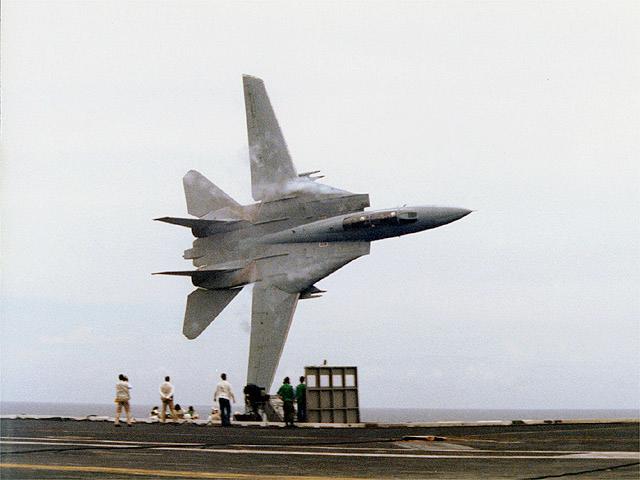 Now that is a photograph. The first impression . . . WOW, what the hell happened here! Second impression: what happened next? Then, you begin to notice the lex vortex condensation, realize he is pulling a few g's, and say, no, this must be a doctored photograph. Well, I do not know. This image was widely distributed among naval aviators on the Web with nothing more than the first impression; so, I do not know who deserves credit. Just enjoy the image.
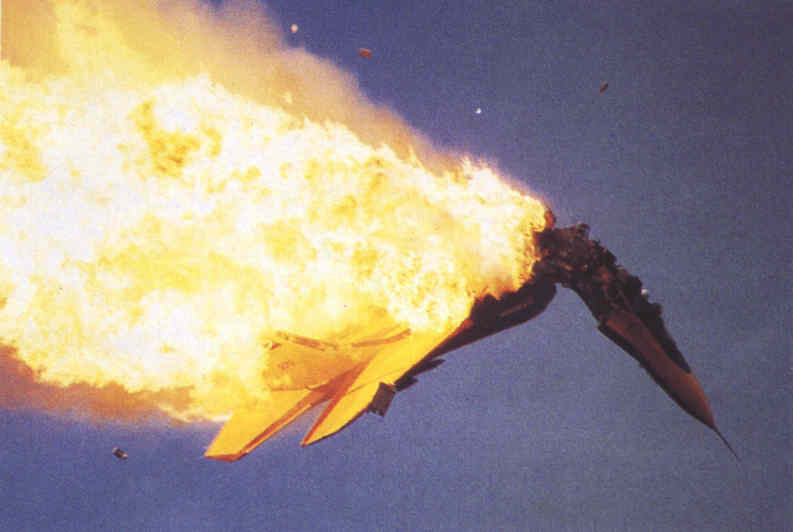
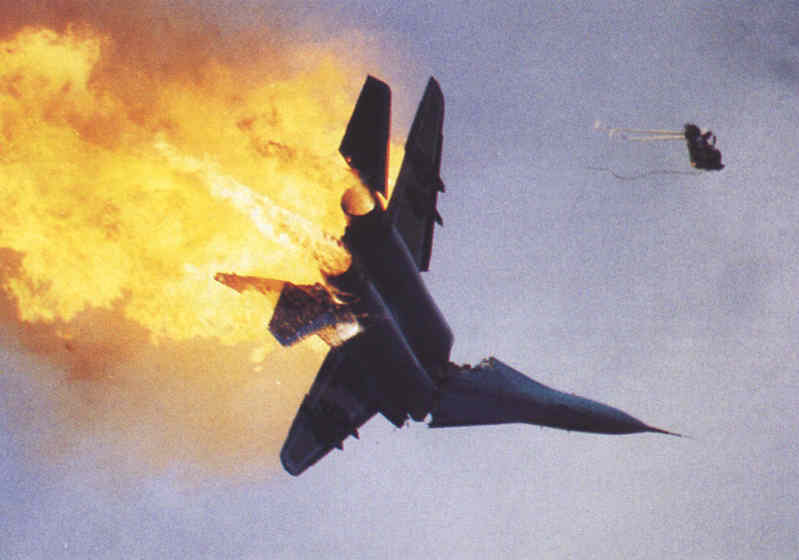 This is a fairly famous set of photographs of the aftermath of a midair collision to two MiG-29's at an airshow, before and after the pilot pulled his ejection handle. This pilot was extremely lucky. Those of us who have done airshows shudder with pain, and then say in a whispered voice, there but for the grace of God go I. The Russian ejection seat has had some very public successes...a heck of seat.
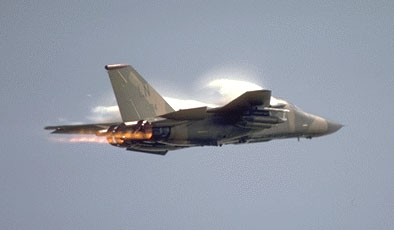 The above photograph is a USAF F-111F in full afterburner (or reheat) and belongs to Evert J. van Koningsveld, a Dutch aviation photographer, Cap met on the Web. The bright condensation cloud above the wing denotes the low pressure region above the wing. Mr. van Koningsveld has created one of the most impressive aviation photo sites on the Web. Everyone who likes anything to do with aircraft are encouraged to visit:
http://www.sky-flash.com/. If you are impressed by his photographs, please link to his site so more aviation enthusiasts can enjoy his work.
The above photograph is a USAF F-111F in full afterburner (or reheat) and belongs to Evert J. van Koningsveld, a Dutch aviation photographer, Cap met on the Web. The bright condensation cloud above the wing denotes the low pressure region above the wing. Mr. van Koningsveld has created one of the most impressive aviation photo sites on the Web. Everyone who likes anything to do with aircraft are encouraged to visit:
http://www.sky-flash.com/. If you are impressed by his photographs, please link to his site so more aviation enthusiasts can enjoy his work.
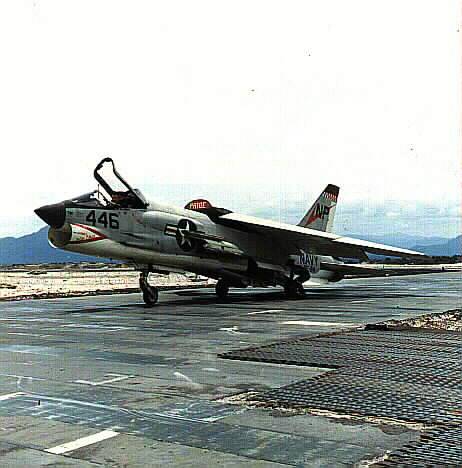
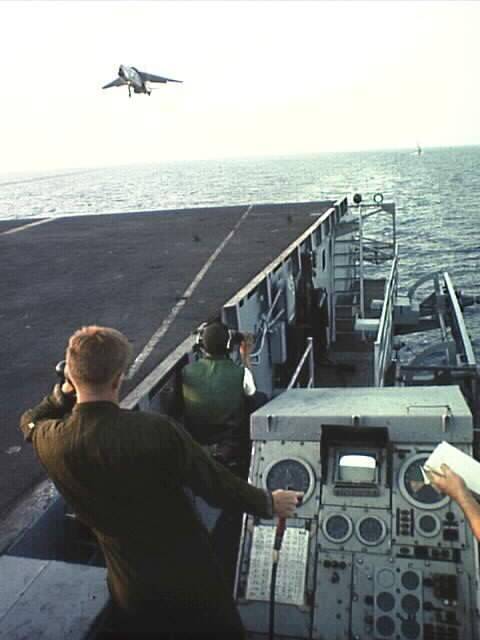
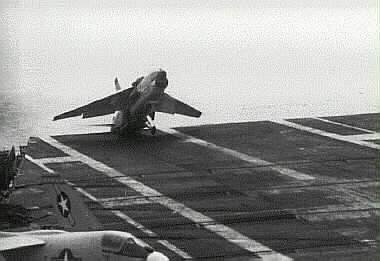
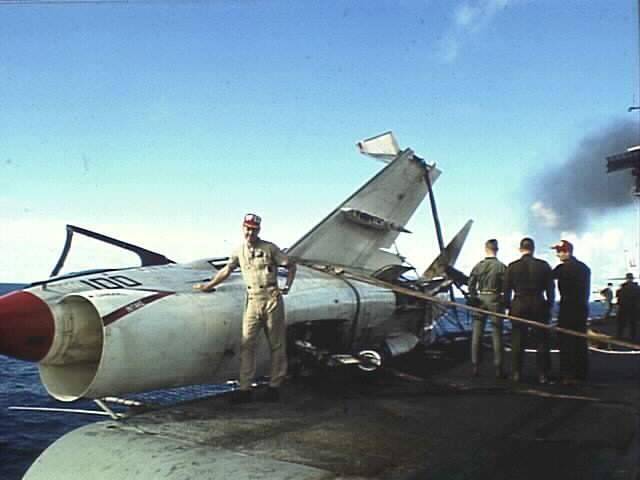 A few images of the regal but sporty F-8 Crusader; the images were provided by a fighter pilot friend who has fond memories. First, an alert bird on the mat in Vietnam. Second, the Landing Signal Officer's view of an F-8 on short final. Third, ramp strike. Fourth, the result; well, not from the previous image. All those who flew the F-8 speak of its magnificence in reverent terms but also the respect they had for the machine. The F-8 Crusader required precision. Images courtesy of Dave Johnson and the Crusader Association. Homepage:
http://www.f8crusader.org
A few images of the regal but sporty F-8 Crusader; the images were provided by a fighter pilot friend who has fond memories. First, an alert bird on the mat in Vietnam. Second, the Landing Signal Officer's view of an F-8 on short final. Third, ramp strike. Fourth, the result; well, not from the previous image. All those who flew the F-8 speak of its magnificence in reverent terms but also the respect they had for the machine. The F-8 Crusader required precision. Images courtesy of Dave Johnson and the Crusader Association. Homepage:
http://www.f8crusader.org
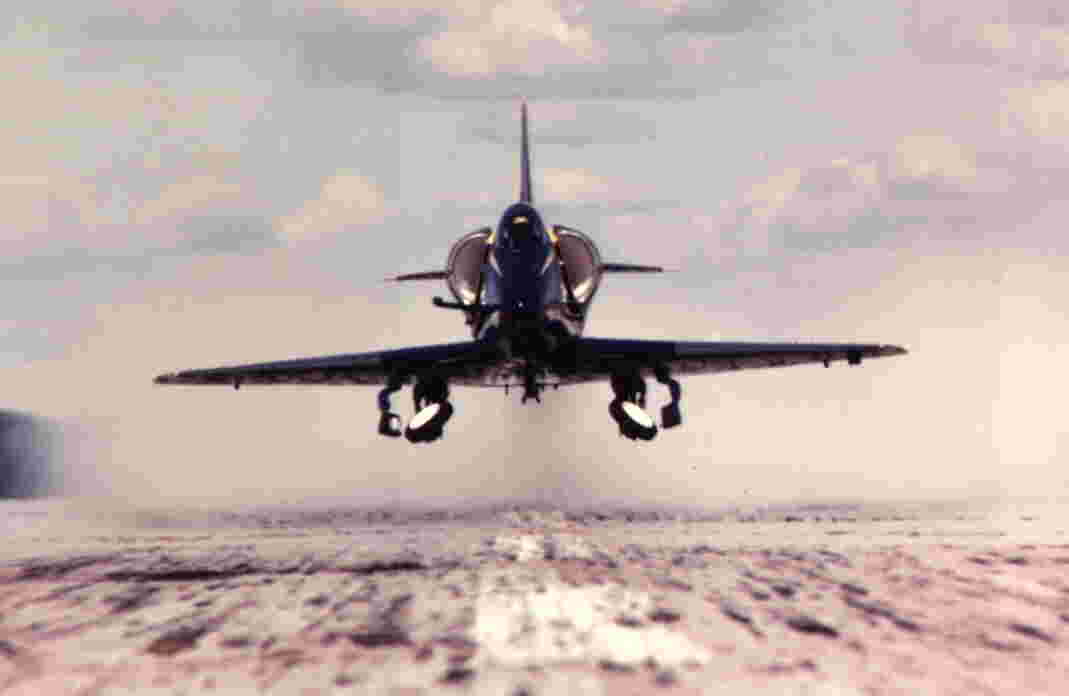 This photograph is courtesy of the US Navy Blue Angels Flight Demonstration Team and is symbolic of how it all began for Cap. Somewhere back in the 1950's, Cap's first recollection of flight was a Blue Angels airshow at NAS Alameda in California. Back then, they were flying Grumman F-11F Tigers. Cap has a large variety of photographs he has taken over the years when they flew McDonnell Douglas F-4 Phantoms, A-4 Skyhawks and their current aircraft the F/A-18A Hornet; eventually, those photos will make it to this page. The photo above shows a Blues solo A-4 just off the runway with smoke on.
THE IMAGES IN this section were taken by Cap's son, Courtney, on 1.July.1994, at Duxford, Cambridgeshire, with Jeanne in attendance as well. Thanks to Jeanne, Cap enjoyed the rare opportunity to fly a Vickers-Supermarine Spitfire Mark IX. The woman is Ms. Carolyn Grace, owner of the aircraft. Ms. Grace is a qualified pilot and flys her Spitfire regularly as a tribute to her late husband, Nick.
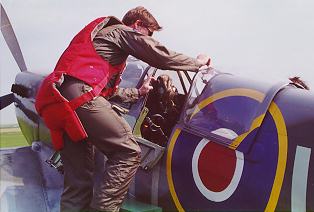
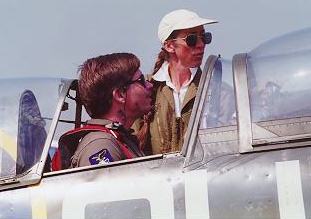
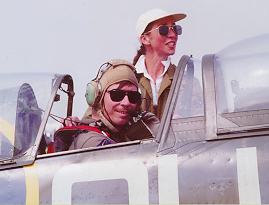
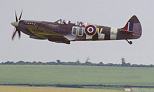
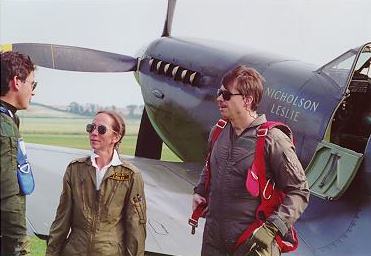 THIS SUPERB AIRCRAFT is a Vickers-Supermarine Spitfire LF Mark IXe, serial number ML407. It is powered by a Rolls-Royce Merlin 66 engine in the Low-alitude Fighter role with an e wing armament configuration. It was built at Castle Bromwich and delivered to the RAF 24.April.1941. The markings, OU-V and the broad black & white stripes, identify this Allied D-Day aircraft as part of No.485 (NZ) Squadron. Flying Officer Johnnie Houlton flying ML407 was credited with the first D-Day aerial victory over a Ju88. ML407 was converted to its current trainer configuration for the Irish Air Force in 1951. Nick Grace bought the aircraft in August 1979, and restored it to its present grandeur. You can learn more about the ML407 Spitfire in the book:
Smallwood, Hugh. 2nd TAF Spitfire. Halstead, Essex, England: Solo Enterprises, 1994.
[ ISBN: 0-9511390-2-9 ]
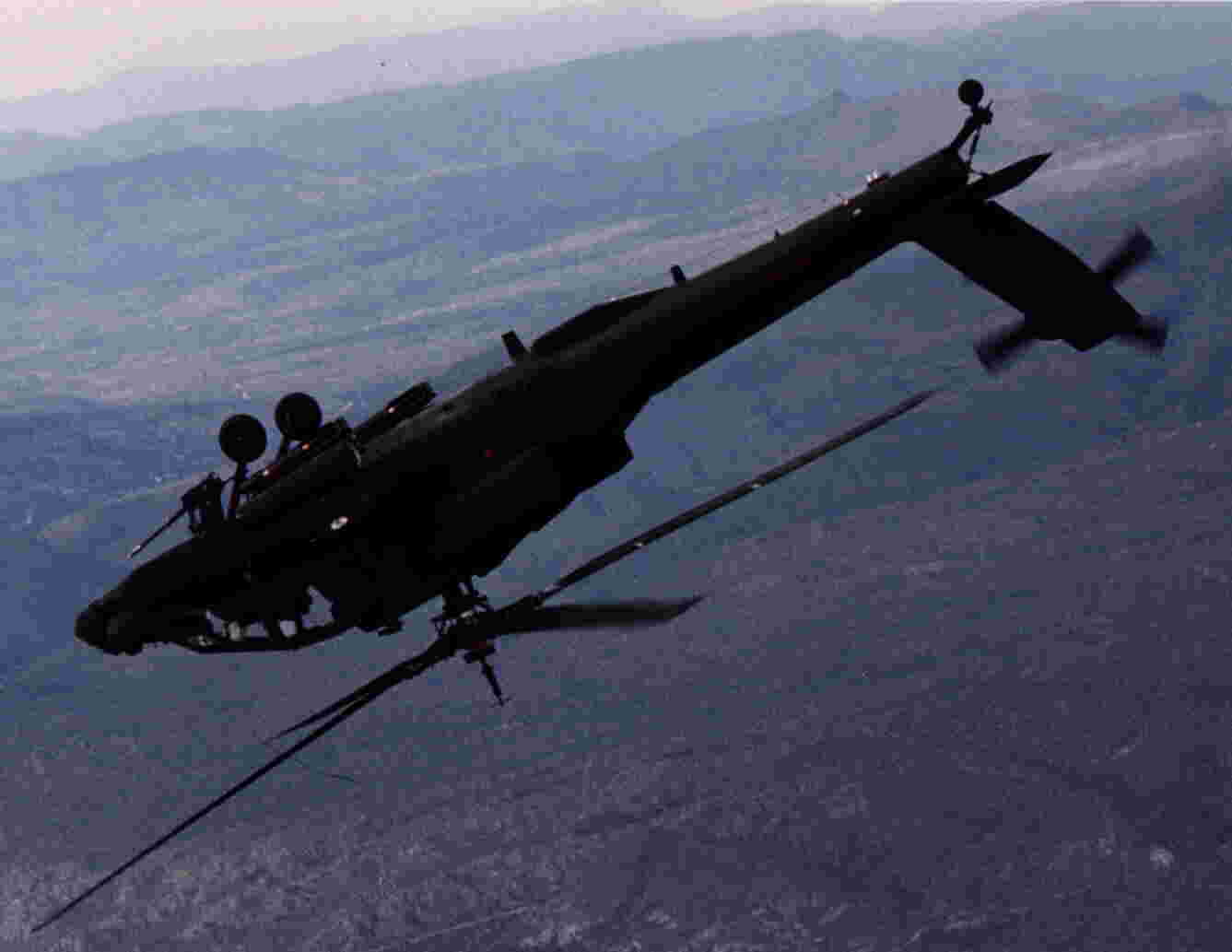 THIS PHOTOGRAPH WAS taken March.1987, north of Mesa, Arizona. Cap Parlier is the pilot, and Ed Wilson is the co-pilot. This is early in the aerobatic development flight test effort to demonstrate the air combat maneuvering potential of the McDonnell Douglas AH-64A Apache attack helicopter. The aircraft is instrumented for handling qualities.
 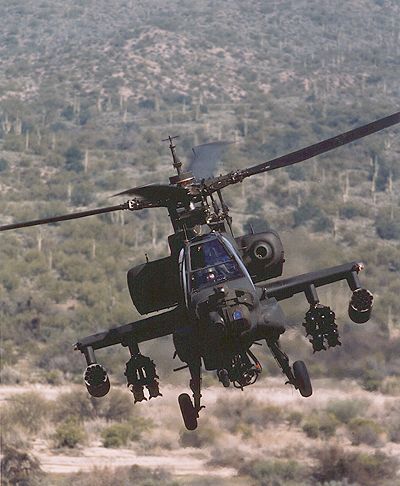 A series of aerobatic maneuvers were evaluated including: Split S, Loop, Barrel Roll, Hammerhead, Reverse Half Cuban 8, among others. Eventually, an aerobatic airshow routine was developed and displayed at the 1988 Farnborough Air Show in England and various other demonstration sites.
DURING A FLIGHT demonstration of the AH-64 to a Member of Parliament and minister of Defence at Middle Wallop in Septermber 1988, Cap made the comparison of the Apache's roll performance to that of the vaunted Spitfire. The minister rejected Cap's comparison since he had not flown the WW II aircraft. Now, Cap has flown the Spitfire, and the Apache rolls like a Spitfire!
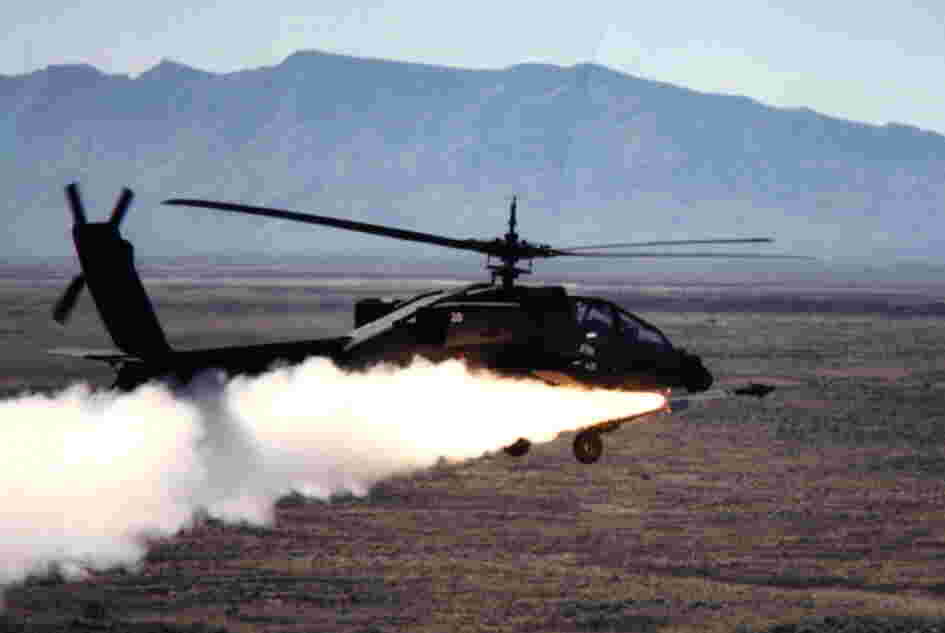 THE MCDONNELL DOUGLAS AH-64A Apache has proven to be a highly maneuverable, agile platform with enormous potential well beyond the current capability deploy by the US Army. This photograph documents the first live firing of an AIM-9M Sidewinder air-to-air missile from the Apache at White Sands Missile Test Range in New Mexico. The test series was part of a larger air-to-air development effort by McDonnell Douglas Helicopter Company that included seeker testing of the Sidewinder, the Matra Mistral and the Stinger missiles against low & slow + high & fast targets as well as the use of the Hellfire LASER guided missile against helicopter targets. Of particular significance was the integration of the air-to-air missiles with the Apache's sophisticated targeting systems.
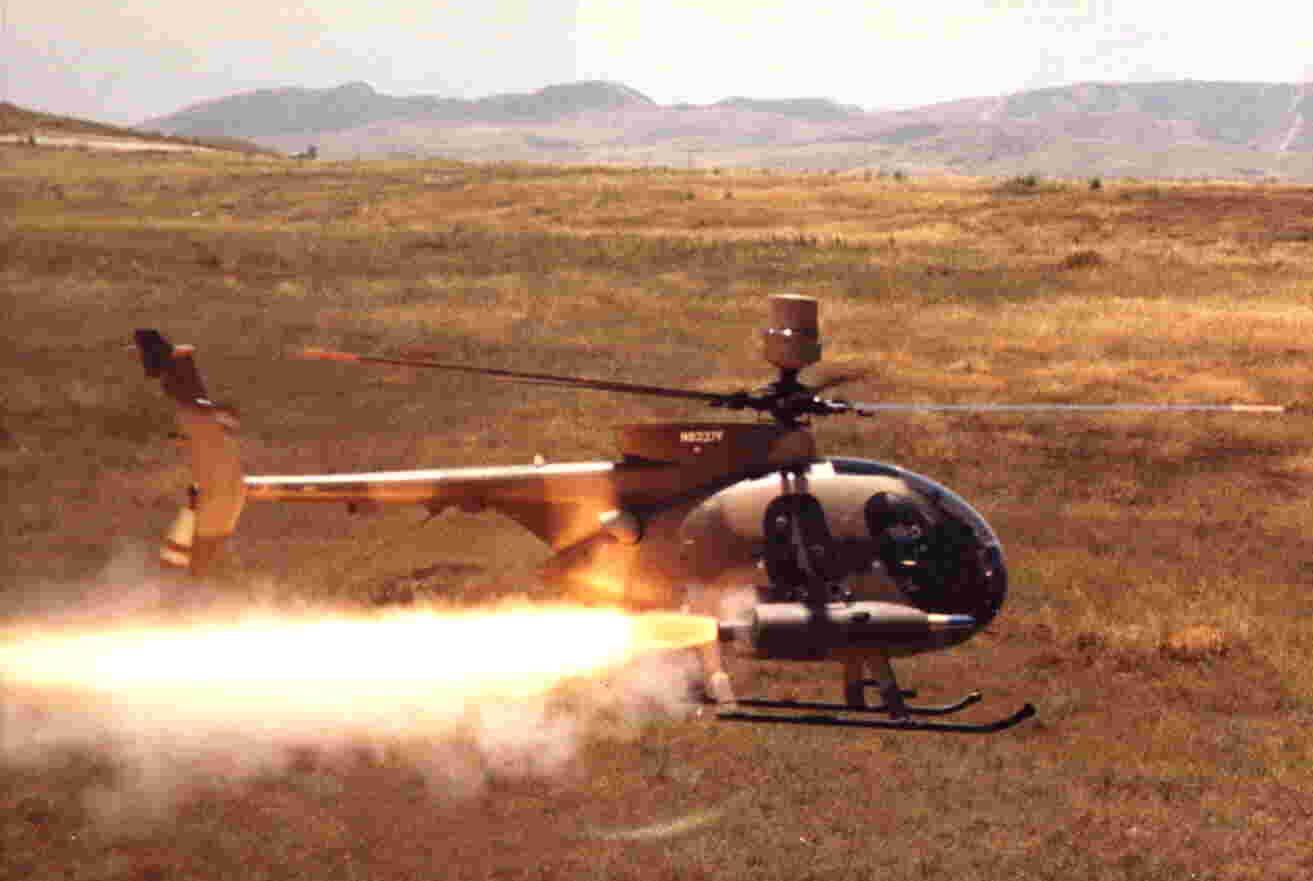 CAP's FIRST TEST project at then Hughes Helicopters was as the project team leader, co-pilot and trigger man for the Hughes 500MD Mast Mounted Sight aircraft. The small box above the main rotor is similar to the Hughes Aircraft TOW sight used on the AH-1J/S/T/W attack helicopter. The sight/weapon system combination enables the nimble, little machine to hide behind a hill, building, treeline or whatever, find the target and fire a TOW missile over the obstacle without exposing the helicopter to enemy fire. The photograph was taken at the initial firing qualification tests conducted at Camp Pendleton, CA, in 1982.
This page was last modified:
12.December.2004